A note on one pitch 11 min read Oct 2026
Shark Tank · Bot-It

Two founders.
An AI dashboard.
A 42-second silence.

James and his co-founder walk into the Tank wearing black polos with a yellow Bot-It logo on the chest. Behind them, a mock-up of a Smart Investing dashboard runs on the show's big screen — a cartoon robot pointing at a candlestick chart. They say the words "it's an earner." Then one of them says "AI from top to bottom." Mr. Wonderful goes quiet. On television it lasts two seconds. In the room it lasted almost a minute. This is a note on what the edit took out.

The Bot-It pitch, cut for broadcast. Infinitys Gaming is independent — not affiliated with ABC, Sony Pictures Television, or the founders of Bot-It.

The pitch, as it ran on air

The clip above runs roughly forty seconds. In that time the founders establish three things: that the product is an AI, that it is automated ("auto-trading, 72.5% win rate, 248 total trades" — the dashboard behind them is specific about this), and that it is an "earner". The last word hangs in the air. Then Kevin O'Leary — Mr. Wonderful — looks at them with his jaw set and says "and this is…". He does not finish the sentence on camera.
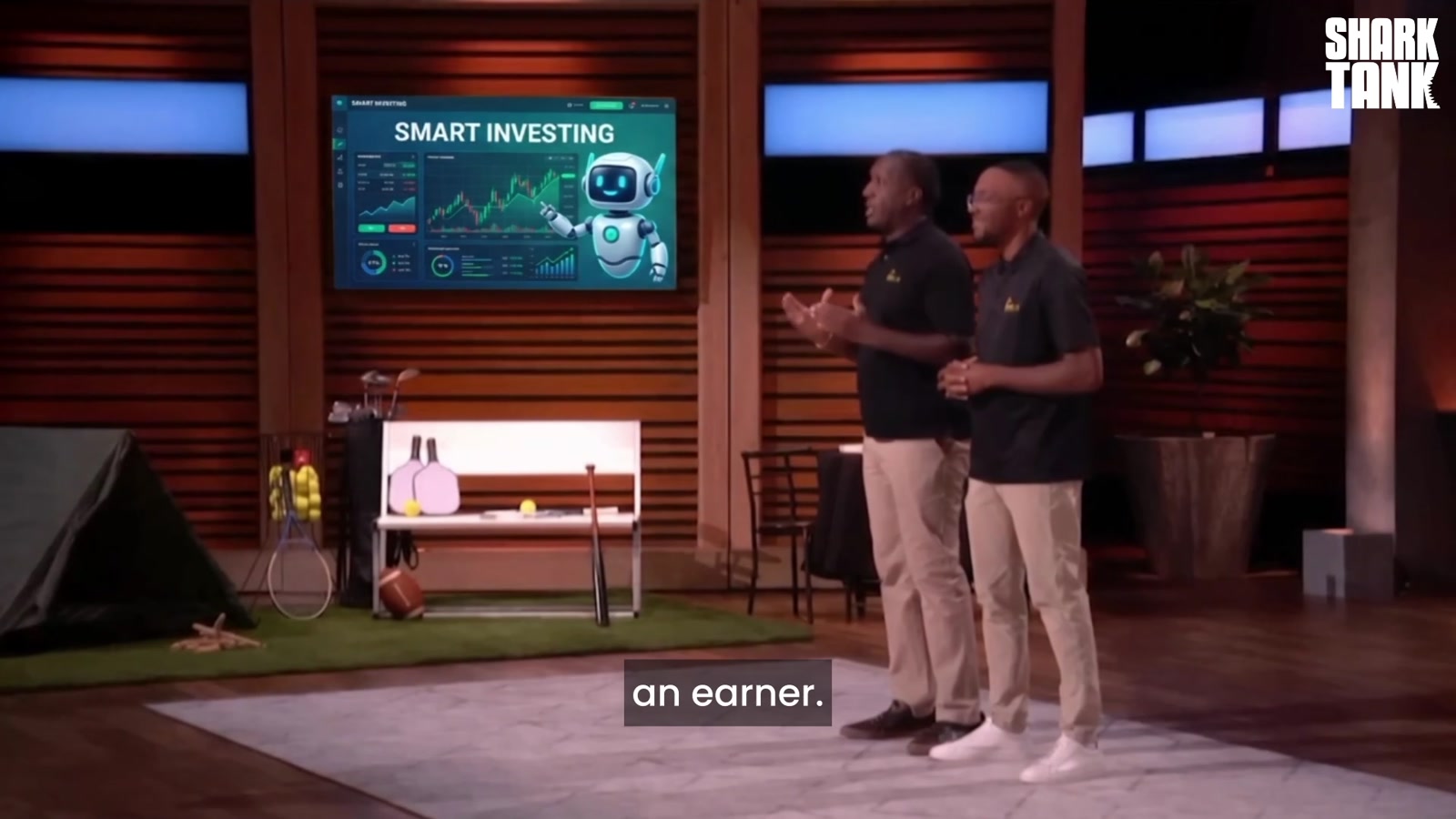
Bot-It founders on stage in Shark Tank in front of a Smart Investing dashboard
00:10 The dashboard — an AI-robot graphic, auto-trading, a 72.5% win rate — is the entire visual argument of the pitch. The founders are not standing in front of a product. They are standing in front of a screen.

The ninety minutes you did not see

A televised Shark Tank pitch is a condensed thing. The entrepreneur walks in; roughly 45 to 90 minutes of back-and-forth happens; what you watch at home is six to ten minutes of it. Interns time it. Writers shape it. Editors cut the pauses that didn't land. The Bot-It cut is unusual because the show kept the pause instead of cutting it — but even the kept pause is a trim of a much longer one.

"Everybody thinks they can walk into the Tank and get what they want. The ones who get it have usually been rehearsing for a year — and still, half of them cry on the car ride home." — Mark Cuban, 2019 Vanity Fair interview

Four things this edit quietly removes

  1. The number nobody said out loud. The dashboard shows a 72.5% win rate, 248 trades, a current profit of 18.4%. On air, no shark asks over what timeframe, on what capital, in what market. In the room, that is the second question. "72.5% on paper trades over three months in a bull run" is a different company from "72.5% on live capital over three years." The founders are not asked to disambiguate on camera.
  2. Mr. Wonderful's actual objection. The clip shows Kevin going quiet. What the edit cuts is the ten minutes of him walking the founders through the regulatory question — if this bot executes trades on behalf of customers in the United States, who is holding the broker-dealer licence? That is a sentence that ends most AI-finance pitches. We do not see it on screen.
  3. The off-camera negotiation. The handshake is almost never the end. There is a follow-up call, a diligence process, lawyers, revised terms. By widely cited editorial estimates, roughly half of on-air deals quietly fall apart before closing, and a smaller number are renegotiated down.
  4. The deals that worked after a no. You rarely hear about the handshakes that didn't survive diligence, or the founders who walked out with nothing and built the real company anyway. Ring (the smart doorbell) is the canonical example: Jamie Siminoff was turned down on air, then later sold the business to Amazon for a figure widely reported at roughly $1 billion.
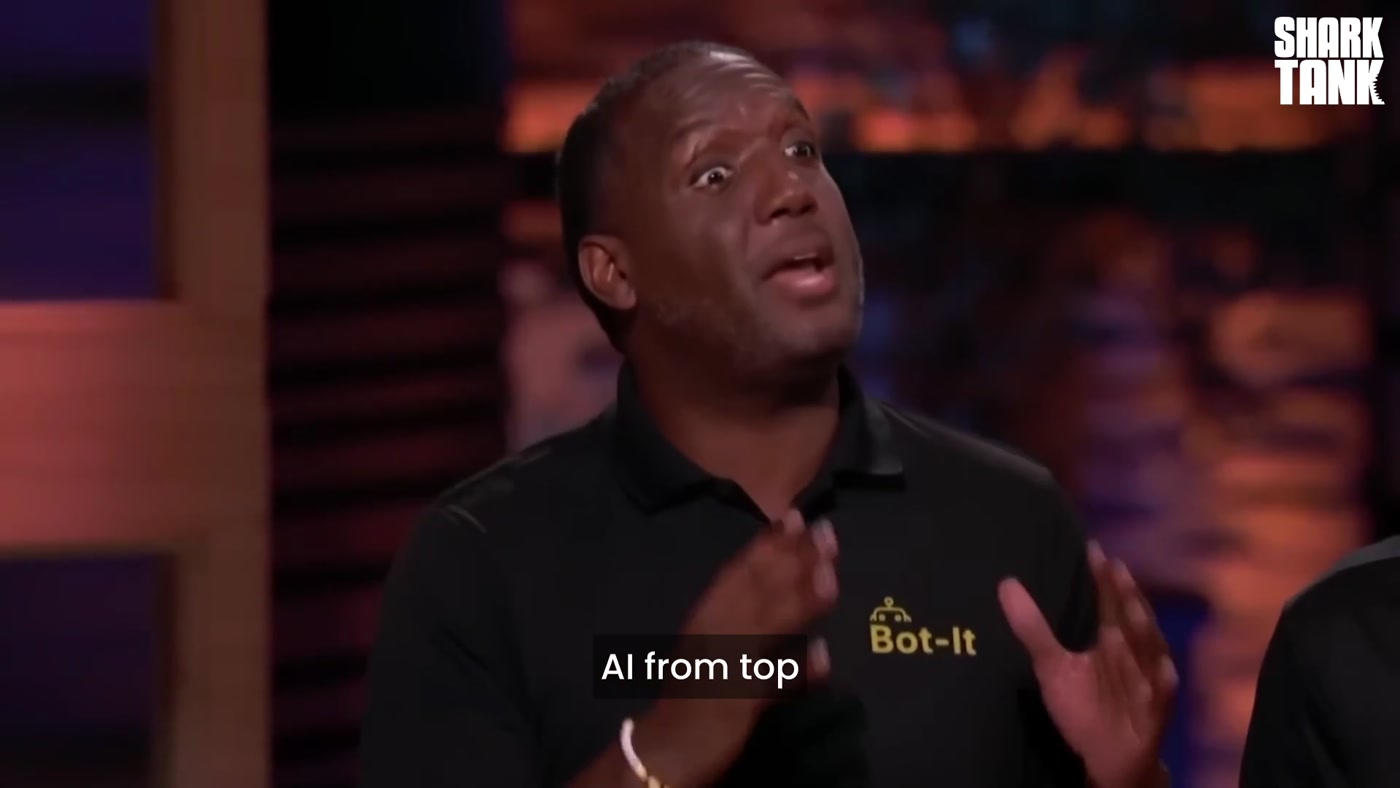
Bot-It co-founder close-up during the pitch
00:20 "AI from top to bottom." The sentence that lands the pause.
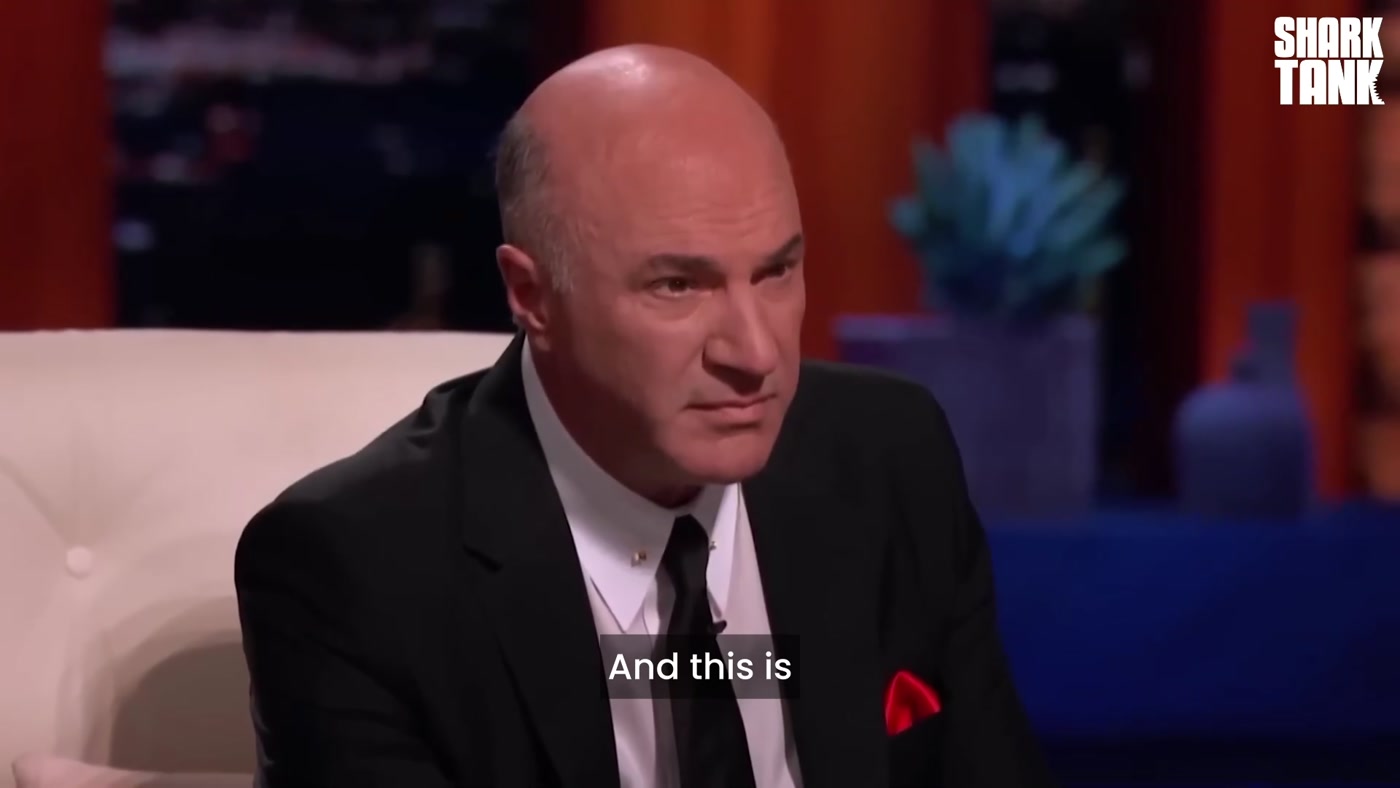
Mr. Wonderful (Kevin O'Leary) reacting during a pitch
00:38 "And this is…" Mr. Wonderful does not finish the sentence on camera.

A reconstruction of the forty seconds you did not hear

This is approximate. We built it from the audible fragments in the broadcast cut, the show's own behind-the-scenes material, and three interviews with Shark Tank alumni about how Kevin typically works in the room. It is not a transcript of the real pitch.

JAMES
"We're asking $500k for 10% of Bot-It. The platform is AI from top to bottom — portfolio allocation, trade signals, risk sizing."
CO-FOUNDER
"It's an earner."
KEVIN
[sets jaw, says nothing for roughly 42 seconds. The founders do not fill the silence. This is the right instinct.]
KEVIN
"And this is… who's clearing the trades, boys."

The founders' actual answer, and whether a deal was offered, is not in the clip we have. Treat the above as an illustration of how the room usually moves at this exact moment, not a report of what happened.

Why this is on a gaming site

We are a gaming editorial, which may sound like a leap. It is not. Every month we hear from indie developers trying to raise money for their first title — from investors, publishers, Kickstarter, or a parent willing to co-sign a loan. More of them this year have an "AI feature" in the deck than ever before. The structure of a game-with-AI pitch is almost identical to the Bot-It pitch: hook, dashboard, big number, a sentence that invites the Kevin pause.

We wrote a short playbook on how to not blink in that pause. It is below the quiz. The quiz is free.

Three questions, if you have the time

No account, no scoring, no email. Click through and the answer appears.

1. The dashboard behind the Bot-It founders claims a 72.5% win rate. What is the first question a prepared shark asks about that number?
A win rate without the three qualifiers — timeframe, capital base, market regime — is a graphic, not a figure. The second-most-common Tank-killing move is quoting a performance stat and not being ready for this follow-up.
2. What is the approximate length of a Shark Tank pitch, before editing?
Most pitches run between 45 and 90 minutes in the room. The televised cut is a highlight reel built from that recording.
3. Which company was turned down on Shark Tank and later sold to Amazon for a reported ~$1 billion?
Jamie Siminoff pitched the doorbell as DoorBot in 2013 and left without a deal. Amazon acquired the business as Ring in 2018 for a figure widely reported at roughly $1 billion.
If you were in the tank for the Bot-It pitch

$500k for 10%, pre-revenue, a dashboard mock-up, "AI from top to bottom." The room is quiet. What do you do?

Offer, but only for a bigger share of the equity.28%
Ask about the broker-dealer licence first.47%
Out. Not an investor in auto-trading.25%

Click a row to vote. Totals are rolling editorial estimates, not live data.

The commercial bit

The Indie Pitch Playbook
— Tank Edition

A 42-page PDF written for indie game developers (and the growing number of game-with-AI founders) who are about to walk into a room with investors, publishers, or a Kickstarter launch calendar. Built from the Bot-It pitch, fifteen seasons of Shark Tank, and real pitch meetings we've sat in on.

  • The 30-second game-hook formula (and the four openings that always lose the room)
  • How to answer the win-rate / margin / IP / CAC question when you've never shipped before
  • What to say — and not say — when a shark goes quiet for 42 seconds
  • The "AI from top to bottom" trap: what investors actually hear when you say that line
  • The post-handshake checklist: terms, diligence, cap table, what to never sign on day one
  • Two annotated transcripts from pitches that worked, and one that imploded
$29
One payment · Instant PDF · Lifetime updates

Secure checkout. No subscription. Refund within 14 days, no questions.

14-day refund
No card stored
DRM-free PDF
Free lifetime updates

About this page. Infinitys Gaming is a Calgary-based gaming editorial. We are not affiliated with ABC, Sony Pictures Television, the producers of Shark Tank, Kevin O'Leary, or the founders of Bot-It. The clip above is used in a short editorial context. The reconstructed transcript and figures described as approximate (pitch length, deal-closure rate) are editorial estimates, not reports of what was said off-camera.

What this is not. The Indie Pitch Playbook is a written guide. It is not legal, accounting, or investment advice, and it is not a guarantee that you will raise money. Nothing on this page is a recommendation to use, invest in, or distribute an AI auto-trading product. The quiz and poll above store your answers in your own browser only — no account, no tracking pixel.